Know your saffron
From purple flower to red saffron thread
Meet the saffron crocus and discover how its delicate red stigmas become the spice we bring into our kitchens.
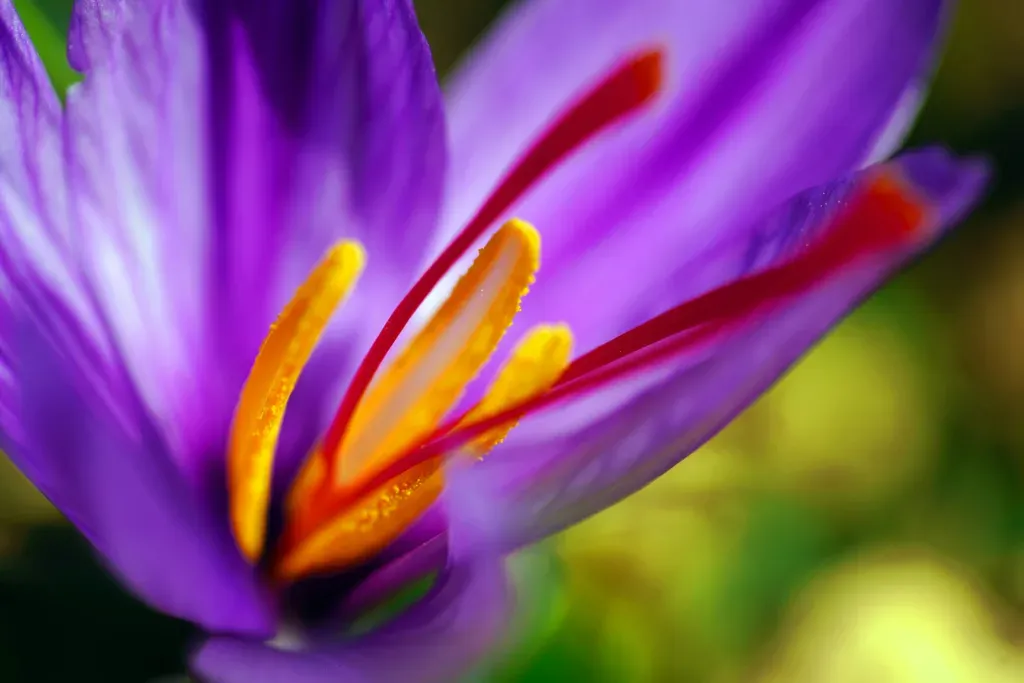
A saffron flower is a beautiful introduction to the spice. Its purple petals are immediately striking, but the part used in cooking is much smaller: the red stigmas inside the flower. Once collected and dried, these become saffron threads.
Meet the saffron crocus
The plant is called Crocus sativus. The Royal Horticultural Society describes saffron as a spice made from its stigmas, used to colour and flavour food. Looking at the flower helps explain why a jar of threads looks so different from the plant it came from.
The petals, yellow stamens, and red stigmas have different roles. Saffron is not made by drying the entire purple flower. It is the carefully collected stigmas that become the culinary spice.
The story of saffron begins with a flower, and continues with the hands that care for it.
A careful transformation
The RHS explains that the stigmas are removed from the flowers and dried. Drying is part of the journey from fresh plant material to the spice kept in a kitchen cupboard. Those fine threads are what you see when you open a jar of saffron.
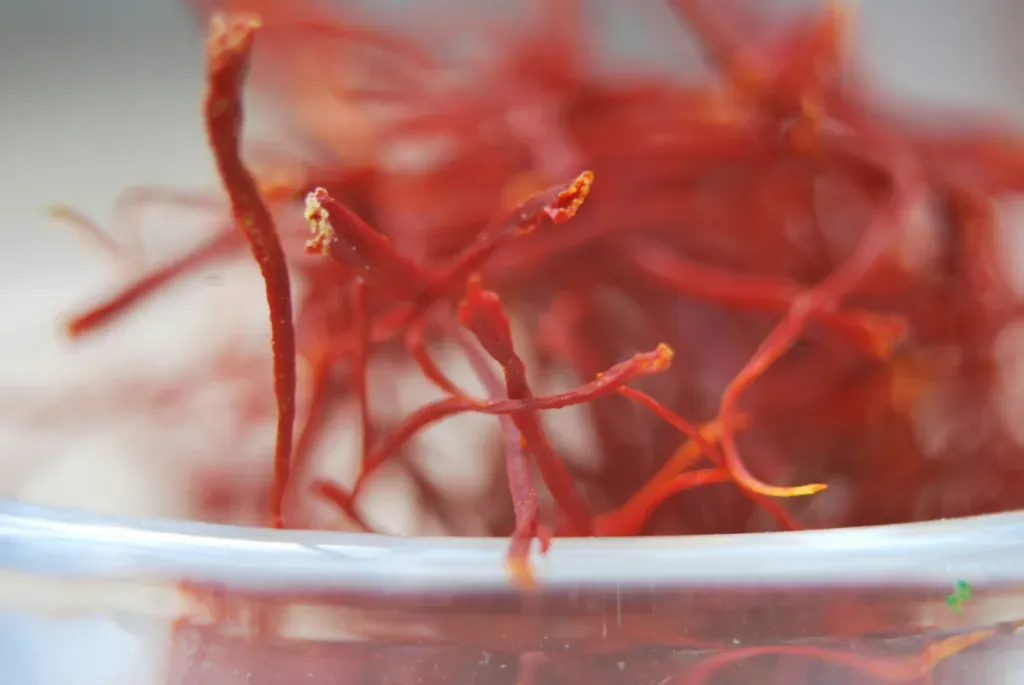
For a cook, seeing the spice in thread form creates a useful connection between the ingredient and its botanical origin. For a cooperative, the same threads also represent agricultural knowledge and work shared across a community.
The connection to Taliouine
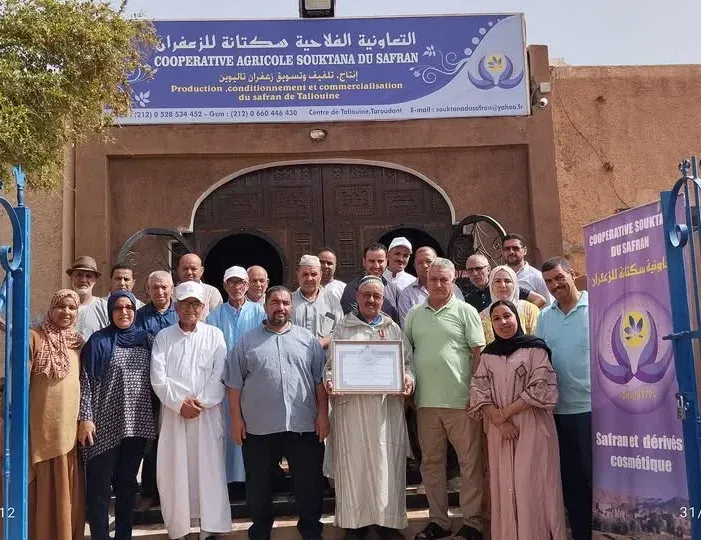
At Souktana, that community is rooted in Taliouine, Morocco. Our cooperative was founded in 1979 and brings together more than 150 farmers. Saffron is both the product we offer and the centre of the story we share with visitors.
Learning about a spice can start with a simple question: where does it come from? Our answer begins with a place, a flower, and the people of our cooperative. To continue that story, meet Souktana or explore our Taliouine saffron threads.
Further reading
For botanical and harvesting information, see the Royal Horticultural Society’s guide to saffron. Its growing calendar is horticultural guidance, rather than a schedule for a particular Souktana harvest.